
How Your Inner Narrator Shapes Anxiety, Confidence, and Decision-Making
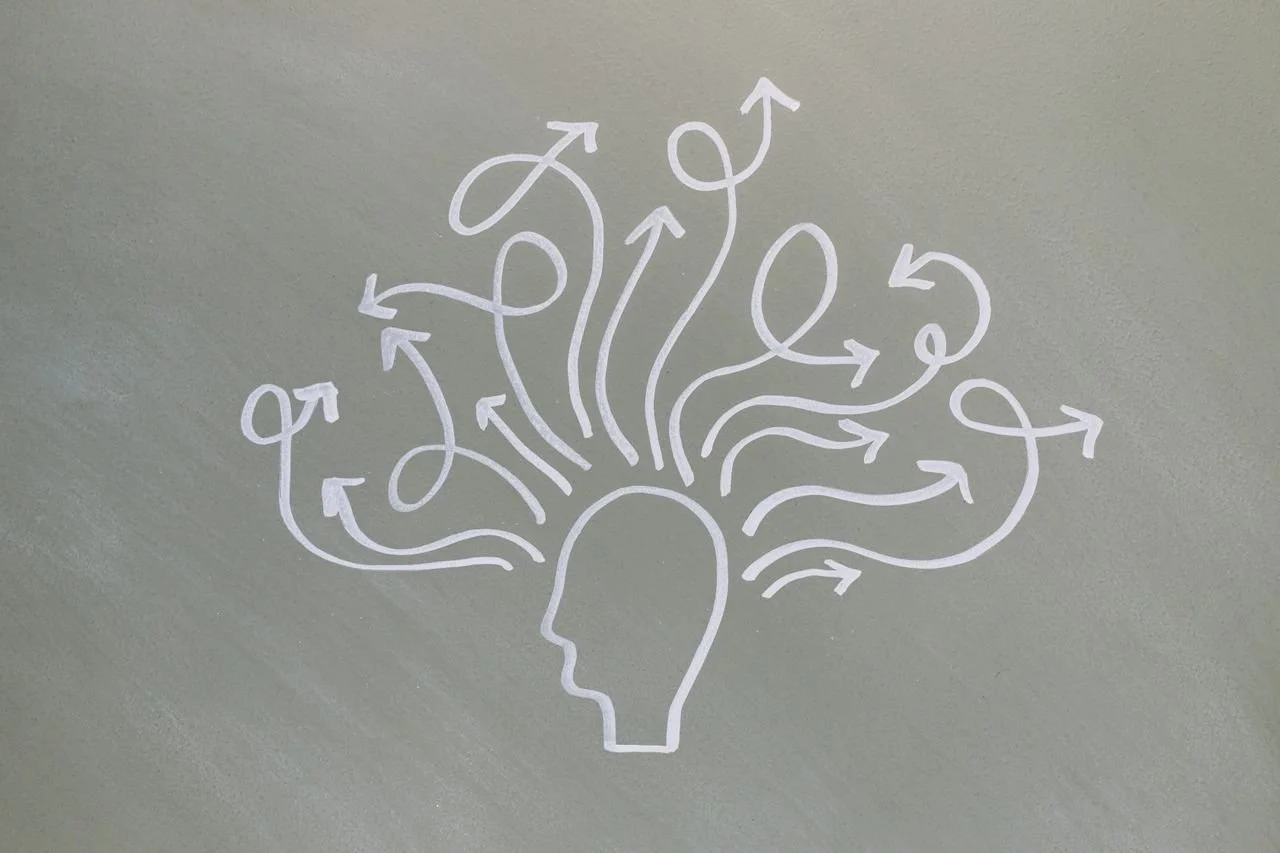
Before you've even walked into the room, a voice in your head has already narrated how it's going to go. You're going to say the wrong thing. They're going to notice you're nervous. This runs before you've made a single decision. That voice, the one narrating your life back to you in real time, is your inner narrator. It has more influence over your anxiety, confidence, and choices than most people realize. It isn't background noise. It's often the loudest voice in the room, even when no one else can hear it.
What Is Your Inner Narrator, Exactly?
Your inner narrator is the ongoing internal commentary that interprets events as they happen, before you've had time to consciously evaluate them. It labels a delayed text as rejection before you know why the reply is late. A stumbling sentence becomes a failure before the conversation has even ended. It can even turn a manager's neutral "let's talk later" into a countdown to bad news. This narration isn't the same as a passing thought. It's a running interpretation, one that shapes how neutral events get filed away as good, bad, or dangerous, often within seconds and without your permission.
Where Does This Inner Voice Come From?
Much of this narration gets built early, often before a person has any say in shaping it. A child who rarely hears encouraging words tends to grow an inner voice that defaults to doubt rather than reassurance. The tone gets set long before the content does, and it tends to repeat the same handful of phrases for decades afterward. This is part of why reparenting yourself to heal childhood emotional neglect often becomes necessary work later in life. The narrator doesn't disappear on its own. It has to be actively given new material to work with, deliberately and repeatedly, until the old script loses some of its grip.
How Does It Fuel Anxiety?
The inner narrator fuels anxiety by treating its own interpretations as fact rather than guesswork. A single tense moment gets narrated as evidence of a much larger problem. The body then responds to that narration as if it were true, releasing the same stress response it would to actual danger, even though nothing dangerous has actually happened. This is exactly the pattern behind learning to recognize and break the cycle of anxiety before it fully takes hold. The anxiety often isn't a reaction to the actual event. It's a reaction to the story being told about the event. That's a very different thing to try to manage, and it calls for a different approach.
How Does It Undermine Your Confidence?
Confidence takes the hardest hit when the narrator keeps rehearsing past mistakes as proof of future ones. Someone who once fumbled a presentation may hear "you'll mess this up too" every time a similar chance appears. It doesn't matter how much has actually changed since then. Interestingly, rebuilding your confidence rarely starts with changing what the narrator says first. It usually starts with proving the narrator wrong through small, repeated actions, until the evidence outweighs the old story. Confidence tends to follow consistent behavior more reliably than it follows a change in self-talk alone. That's part of why simply trying to think more positively so often falls flat on its own.
How Does It Shape Decision-Making?
Decisions get harder when the narrator treats every option as a referendum on your character rather than a simple choice. A few common ways this shows up:
● Replaying a decision for hours after it's already been made
● Avoiding a choice entirely to dodge the narrator's predicted criticism
● Choosing the "safe" option specifically to silence anticipated self-blame
● Seeking excessive reassurance before trusting your own read on a situation
Learning how to stop overthinking when your brain won't slow down often means learning to separate the narrator's running commentary from the actual decision at hand. The two feel fused together in the moment, so much so that the commentary can feel like the decision itself. They aren't actually the same thing, and pulling them apart is most of the work.
What Does The Research Say About Changing This Voice?
This isn't just a self-help idea. Researchers at the University of Michigan's Emotion and Self Control Laboratory have spent years studying this exact pattern. Psychologist Ethan Kross calls it "chatter," his term for the negative loop of self-talk that can worsen anxiety and impair decision-making. Their work has found that small shifts change how the brain processes distress. Referring to yourself by name instead of "I" during a stressful moment is one such shift, and it's been measured, not just theorized.
In Kross's studies, this small linguistic distance was enough to change how participants performed under pressure and how they reflected on stressful events afterward. This kind of distanced self-talk creates enough space to interrupt the narrator without having to silence it completely. That turns out to matter more than trying to argue it into silence.
You Can Rewrite the Narration, Not Just Endure It
Your inner narrator will likely never go completely silent, and that isn't really the goal. What changes is your relationship to it. Recognizing when it's narrating fear as fact, rather than describing an actual event, is often the first real shift. It's what starts to make anxiety, confidence, and decision-making feel less tangled together. That recognition takes practice, not perfection, and it rarely happens on the first try. Start by naming the narration out loud the next time it speaks up. That's this voice again, not the whole truth. Give yourself the space to decide from there instead of from the story alone, one moment at a time.